
Random things I enjoyed in July (2025)
A monthly reading/watching/listening recap

Here I am, in familiar territory for other Substack writers, but new territory for me. I’m an avid consumer of art. Whether it be books, movies, television, video games, or even podcasts, I value the “art” of all mediums equally. So, with these monthly articles, I’ll share the things I’ve enjoyed consuming over the past month. Whether profound or simple, I hope my recommendations here help you more easily find your next memorable read, watch, or gaming experience.
So, what better month to kick-off this “entertainment” recap than July, entrenched in summer vacation, where I’ve been gifted plenty of freedom to explore mediums at my leisure and hand-pick an exceptional few.
The Conformist (1970)
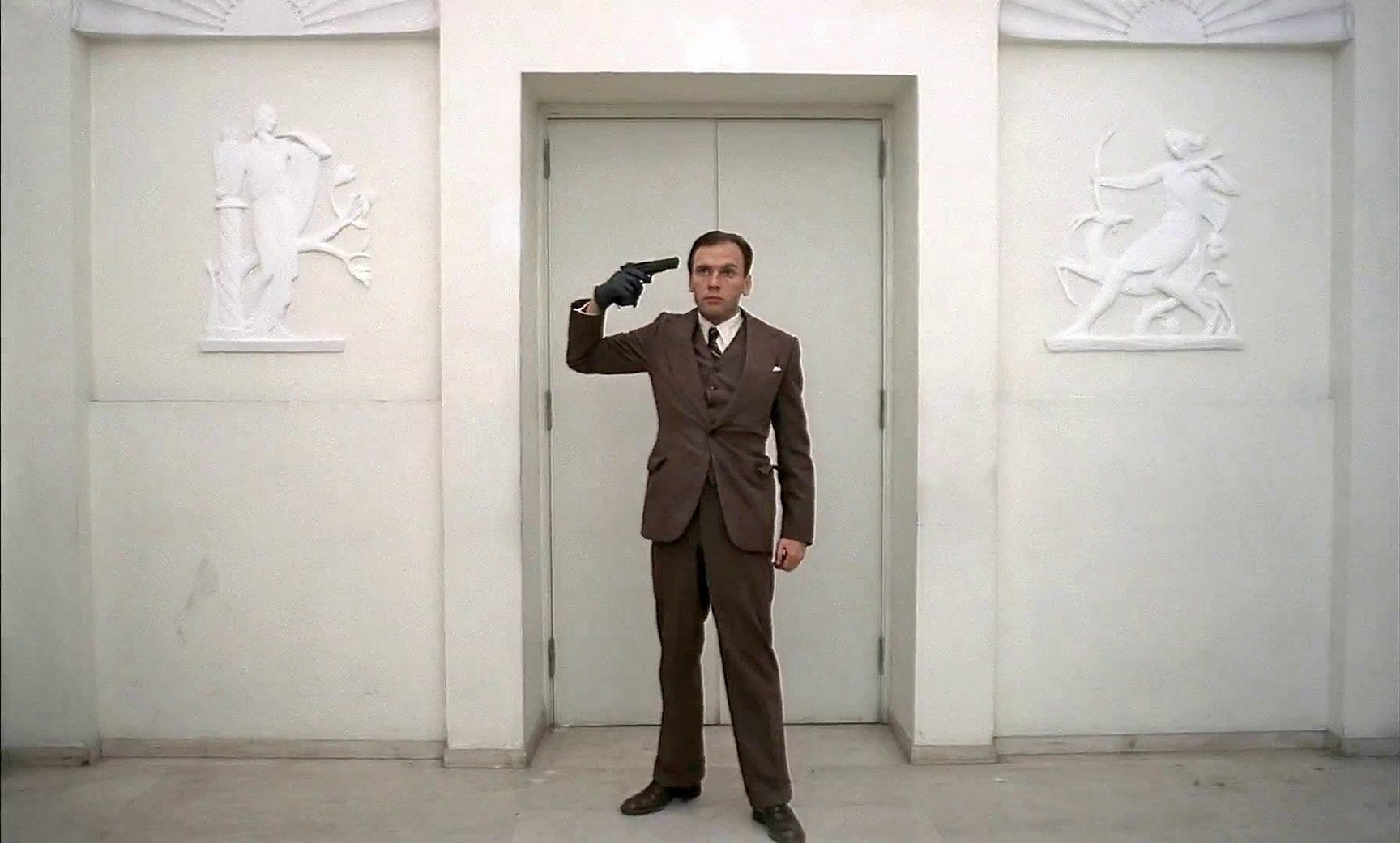
The Conformist is especially relevant in today's age. Following a fascist sycophant during the rise of tyranny in Italy during the late 1930s, The Conformist is a psychological exploration of what makes a man loyal to an unapologetically hurtful set of ideals. A fascist cannot understand shared happiness, and so his joy comes from stripping happiness away from others. Whereas characters around our protagonist find joy in traveling, dancing, shopping, and other shared experiences, the Conformist himself, Marcello Clerici, so desperately wants to be part of something greater than himself that he'll kill a former idol just to be “one of the boys” in fascist Italy.
Marcello is a man born into privilege, whose childhood is tainted by tragedy. His mother’s estate perfectly symbolizes this dichotomy. Large and extravagant, neglect has caused the inside to age prematurely. Like the leaves falling outside, there is a deterioration within the house, within Marcello, and within Europe as fascism quickly takes over. Our protagonist isn’t born evil, but through terrible circumstances during his childhood, he grows up into a deeply insecure man desperate for control, also known as the ideal soldier for the alt-right to manipulate. As his rite of passage, Marcello is tasked with assassinating a former and beloved professor of his university days, an outspoken critic of the current state of Italian politics who has fled to Paris for protection. Under the guise of taking his romantically neglected fiancé on a holiday, Marcello reunites with his former professor, sparks a romance with his wife, and bides his time whilst gaining the confidence to complete his assignment.
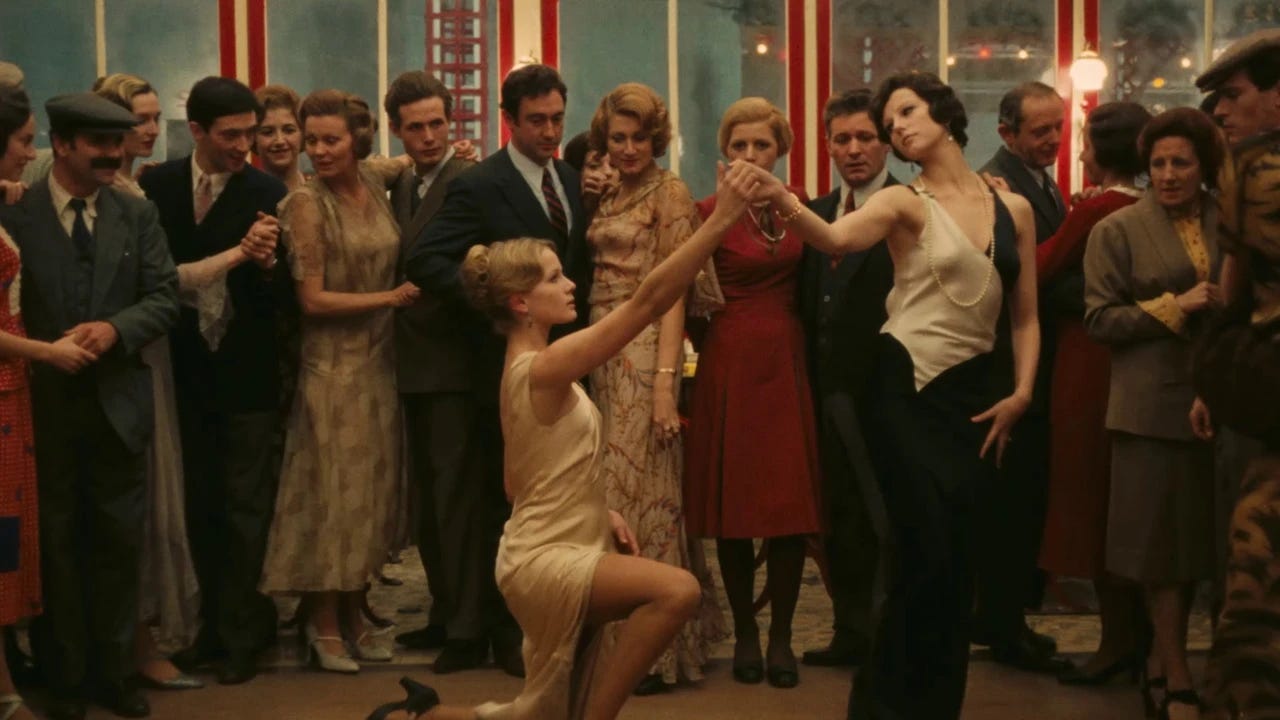
On top of a searing political and psychological takedown of a wretched government system and the morally bankrupt thugs who uphold it, The Conformist boasts autumnal visuals, a sweeping melancholic soundtrack, and a cinematic style that should probably go knocking on Coppola's door for The Godfather royalties. There’s a particularly striking scene in which all attendants at an evening party join hands in dance. They circle a confused Marcello, incapable of understanding their communal joy, frolicking about the room until taking their merriment outside, leaving our protagonist alone, angry, and longing. Director Bernardo Bertolucci calls the story of his masterpiece an “Anti-catharsis,” and considering the depravity with which it concludes, there is no more appropriate description. The Conformist is sad and honest, a commitment which will ensure its thematic timelessness.
Rating: 5/5 Stars.
Peacemaker (season 1)
Whenever revisiting a beloved story, regardless of the medium, familiarity washes away the spectacle of a first-time viewing, and you’re forced to face the finer details. Sometimes, a TV show improves on a rewatch, revealing layers that take time and patience to dig through, and your left with a stronger devotion to your emotional and time investment. Other times, when familiarity washes away said spectacle, cracks appear, and you may still appreciate said show on a rewatch, but the flawless love once held can no longer exist.
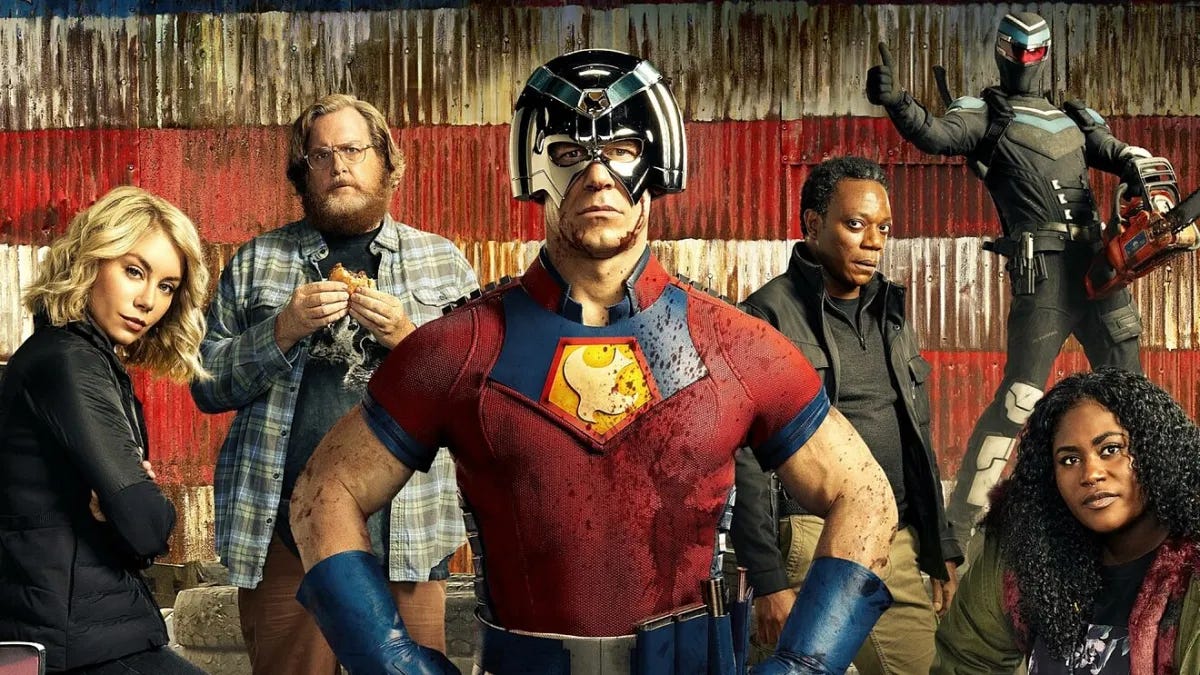
With that out of the way, my personal fondness for Peacemaker was further solidified with this rewatch. Given how season 2 is just around the corner, it felt necessary to refamiliarize myself with a show which I praised endlessly when it first came out. James Gunn is my personal favorite creative mind in the superhero cinematic subgenre. No one crafts ensemble after ensemble of dynamic characters like he can, all of whom are elevated by thoughtful arcs, interactions with fellow perverse but three-dimensional characters, and often intense violence in wildly chaotic action-set pieces. Guardians of the Galaxy 2 and The Suicide Squad are two of my favorite superhero movies, while Peacemaker might be my undisputed favorite superhero show.
Starring John Cena as the titular vigilante with a propensity for shooting first in the name of “justice,” Facebook conspiracies, and glam rock vinyl, the exploration of masculinity, tragedy, and paternal brain-washing are all explored to far more satisfying ends than one would expect for a protagonist who wears a chrome toilet seat for a helmet. On top of that, the season-long plot of intergalactic bugs taking over the world à la Invasion of the Body Snatchers provides significant stakes in a subgenre polluted with world-ending events. It’s not the threat itself, but the good guys in danger, which makes the plot engaging. Each member of this disgruntled and deranged spec-ops group is a necessary piece in this oddly empathetic puzzle, a particular standout being Freddie Stroma as Adrian Chase, a merciless but lovingly naive assassin.
With James Gunn’s new role as the creative director of the DC cinematic universe, there does exist the concern that he simply has too many hands in too many pots to give Peacemaker’s second season the care needed to match the quality of the first. That said, considering how many of the original DCCU’s characters have been left behind in an empty universe, the decision to carry on Peacemaker’s story is all the assurance needed to prove he’s loved enough by the man in charge to not be forgotten.
The Rest Is History podcast

If you couldn’t tell already, I’m a bit of a history fiend.
Popular historians and best-selling authors Tom Holland and Dominic Sandbrook unite in what is quickly becoming one of my favorite history podcasts. Throughout years of podcasting, The Rest is History has covered subjects almost as vast as world history itself. With a specific interest in the countless wars throughout Europe, as a recent fan I’ve been particularly hooked on their series on Peter the Great of Russia and the Great Northern War, a sweeping conflict between Russia and Sweden that wrapped many an ambitious ruler into its bedlam. From focusing on smaller topics like Augustus II the Strong’s obsession with the remarkably cruel sport of fox tossing, to pondering the existential question of why such a massive war across Europe isn’t well-remembered in the present day, their series on the Great Northern War kept me hooked from episode to episode as if it were a prestige television adaption of these events. Charles XII of Sweden performs feats of bravery during this war akin to Alexander the Great in Persia, and yet today his star shines nowhere near as bright.
Academically-trained, the conversations between Holland and Sandbrook are scrupulously researched, sometimes with nonfiction written by the podcasters themselves! That said, nothing about The Rest is History is “dry” in the academic sense. With a conversational tone throughout, they joke and point out absurdities within the embellished texts of old. They recognize the humanity within history, weaving a compelling narrative fit with character arcs and compelling climaxes. Though they never lower themselves to hilarious depravity of Ray and Cam’s the Life of Caesar podcast, which I must identify as the catalyst for my fascination with Ancient Roman history, Holland and Sandbrook are endlessly fun to listen to.
Some Kubrick Classics
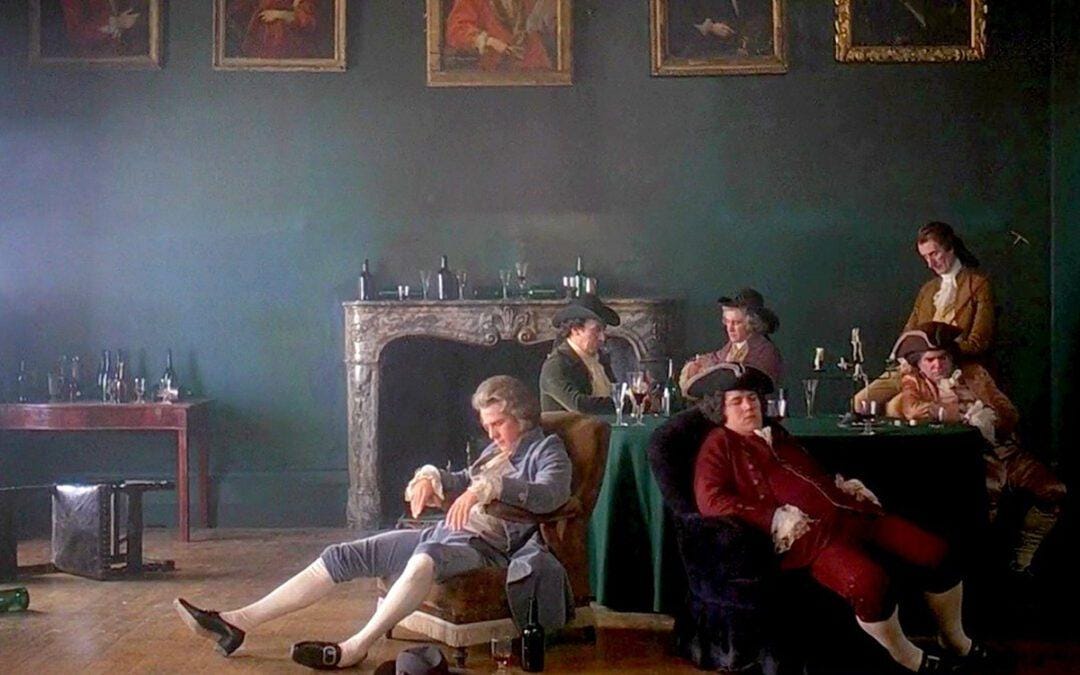
A personal passion project for summer break has been going through director Stanley Kubrick’s filmography for an inevitable ranking of all of his films (which will likely end up here, so don’t forget to subscribe). I’m familiar with a majority of the auteur of all auteur’s major films, but for this project, I’ve committed myself to watching, or rewatching, everything. Some films I’ve missed up until the start of this project include Barry Lyndon, put together after Kubrick had already scrupulously researched its historical setting for his ill-fated Napoleon feature. With a runtime of three hours and some change, Barry Lyndon was a lot to process on a first viewing. Though in the immediate aftermath of the closing credits, I can’t say the film left much of an impact, it’s now been well over a month since this first go-around, and some scenes just haven’t left my head. With a dedication to natural lighting, along with Kubrick’s notorious perfectionism across all of his films, Barry Lyndon, unlike any of his other movies, feels like it should be hung The National Gallery. A simply exquisite-looking feature, no movie feels like your treading upon an 18th century painting like Barry Lyndon. A persistent theme among my rewatches of Kubrick’s films is a greater appreciation for their craftsmanship, and when the urge inevitably brings me back to Barry Lyndon, I anticipate a similar sentiment.
Speaking of newfound appreciation, one such revisit during the month of July was with Paths of Glory, a movie I watched for the first time in 2020 and haven’t touched since. Paths of Glory didn’t leave a particularly strong impact on me the first time around, besides an appreciation of how every war film in its wake somehow has taken inspiration from it, but on a rewatch, it might be my favorite of Kubrick’s collection. Maybe its because the selfishness of world leaders and government officials has been put under a spotlight now more than ever before, but the theme underlying Paths of Glory, that of people in power making short-sighted decisions for immediate profit or praise, uncaring of how many tens, hundreds, or thousands of people will suffer along the way, feels especially poignant in the year of our Lord 2025. A title or rank can get a heinous crime absolved at the snap of a finger, while the common person, guilty of nothing but survival, is punished harshly to distract from or take the place of a mistake committed by his superior. The abuse of power is a consistent theme among all of Kubrick’s war films, and one I never fully appreciated until I grew up into an adult trying to navigate the real world.
Suffice it to say, Kubrick’s work gets better with age, and this little passion project has reintroduced me to some of cinema’s greatest masterpieces.